Emergency First Aid at Work (EFAW) Course
Key Features
Of this Emergency First Aid At Work Course:
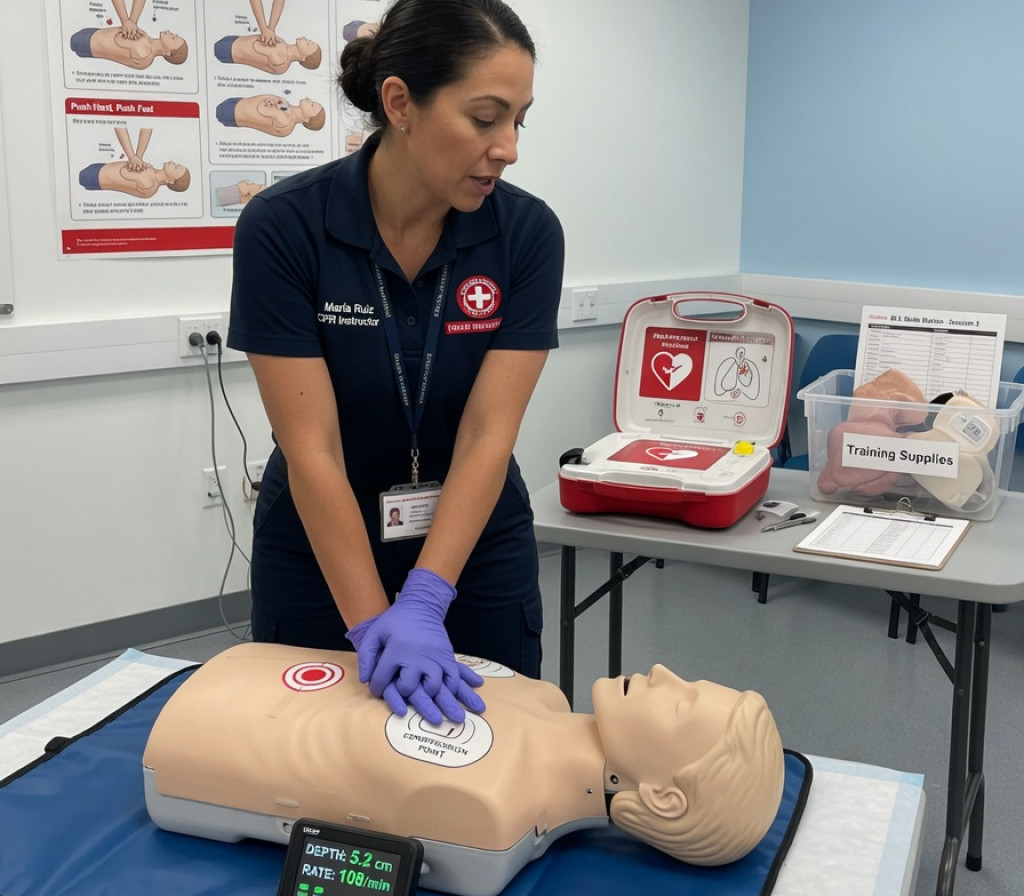
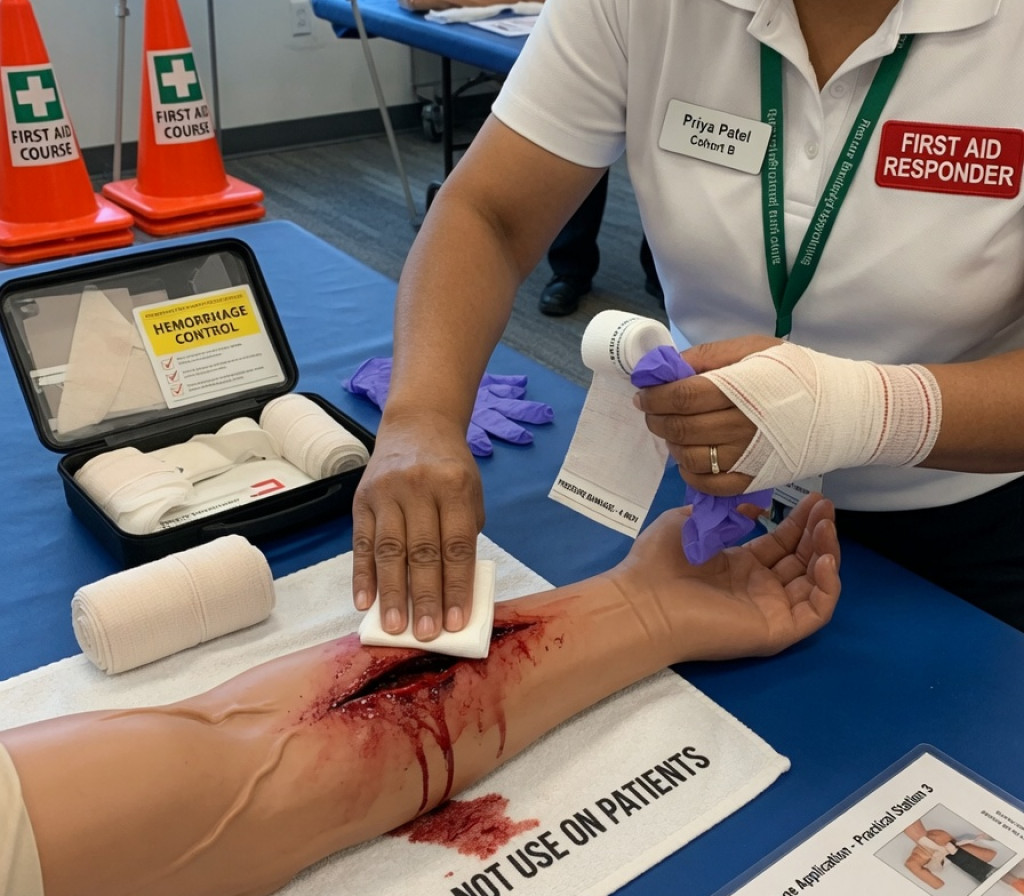
- Provides practical skills to respond to workplace emergencies including cardiac arrest and severe bleeding
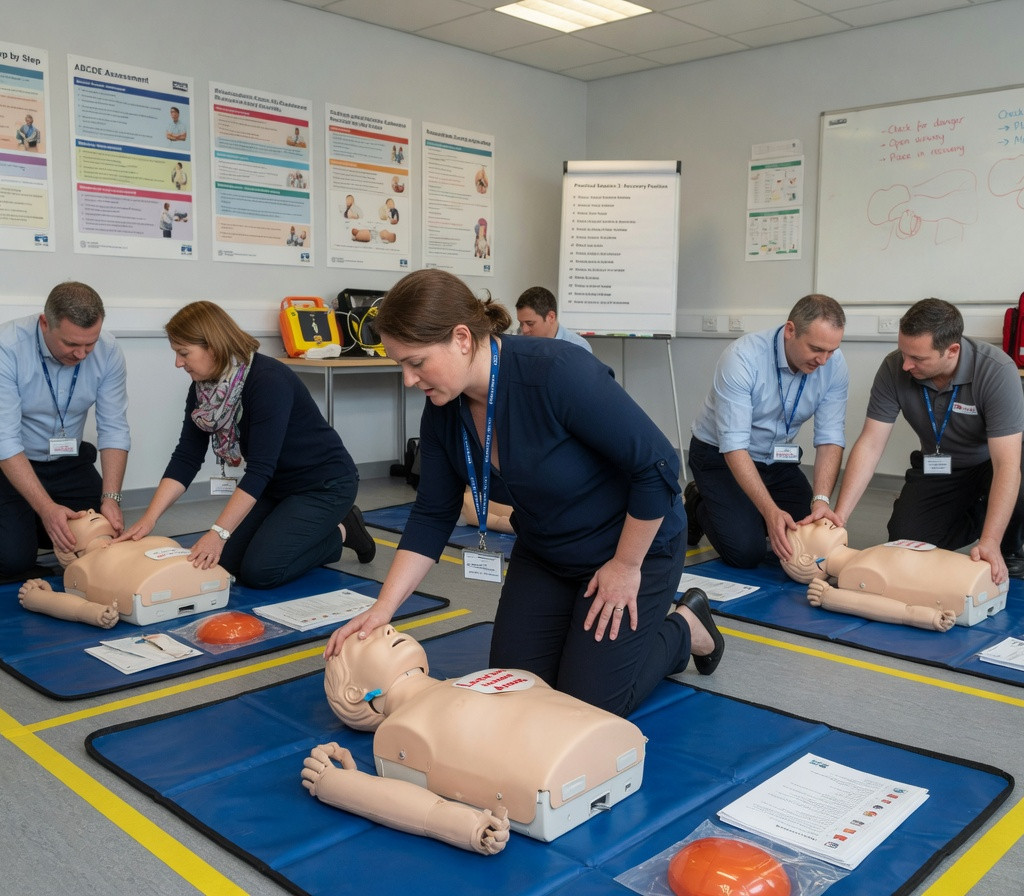
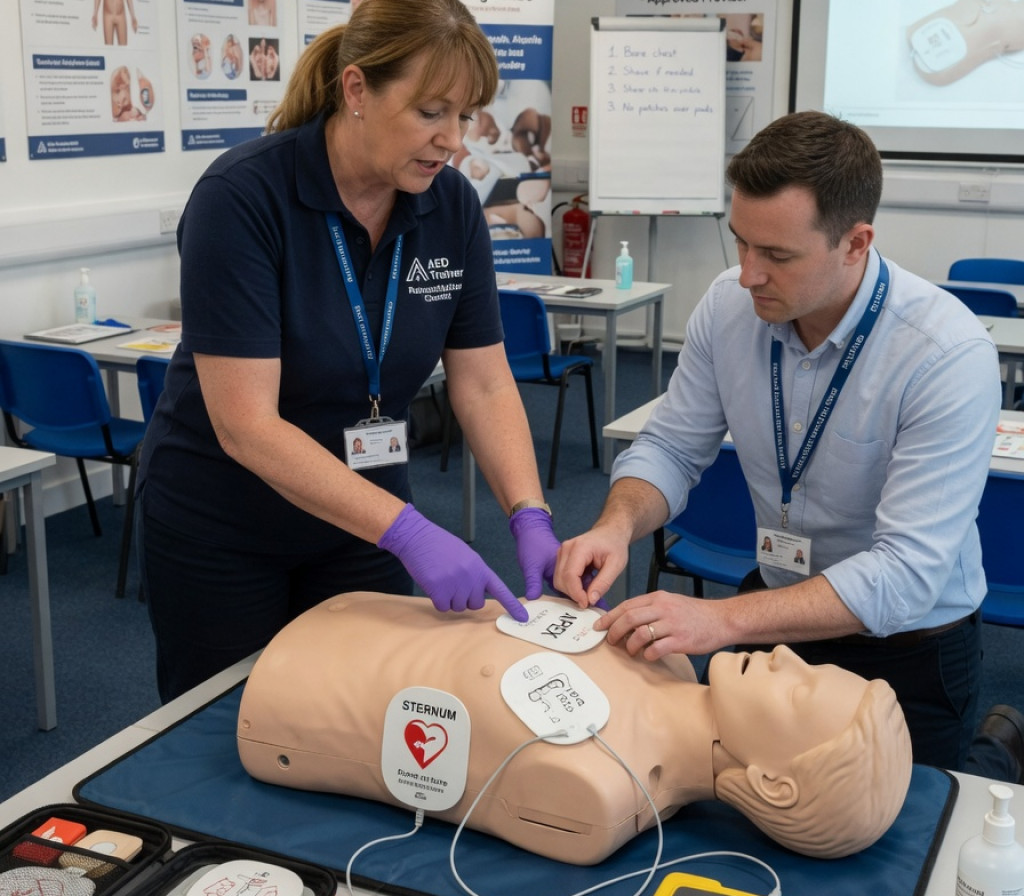
- Includes hands-on CPR, AED use and casualty assessment in realistic scenarios
- Meets HSE requirements for designated first aiders in low-risk environments
- Delivered through a single day of instructor-led practical training
- Covers legal responsibilities and record-keeping for workplace incidents
- Results in a recognised qualification valid for three years
Course Date Availability
Emergency First Aid At Work training at the following 54 centres. Prices from £75 per person :
Course Information
Overview:
The Emergency First Aid at Work (EFAW) course equips delegates with the core skills needed to manage common emergency situations until professional medical help arrives. It focuses on immediate actions for unconscious casualties, breathing difficulties, major bleeding and shock in everyday workplace settings. In 2026 this qualification continues to support employers in fulfilling their duties under the Health and Safety (First-Aid) Regulations 1981 by ensuring suitable first-aid provision is available on site.
The training combines short theory sessions with extensive practical exercises so delegates leave confident in their ability to assess an incident, provide appropriate care and communicate effectively with emergency services. Real workplace examples are used throughout to illustrate how techniques apply in offices, retail premises, warehouses and light industrial environments.
Who Should Attend?
This course is designed for:
- Office and administration staff
- Retail and hospitality employees
- Warehouse and distribution workers
- Teachers and school support staff
- Light industrial and manufacturing personnel
- Managers responsible for first-aid arrangements in low-risk workplaces
What You Will Learn
By the end of the course you will be able to:
- Primary survey and safe approach to an incident
- Cardiopulmonary resuscitation (CPR) for adults
- Safe use of an automated external defibrillator (AED)
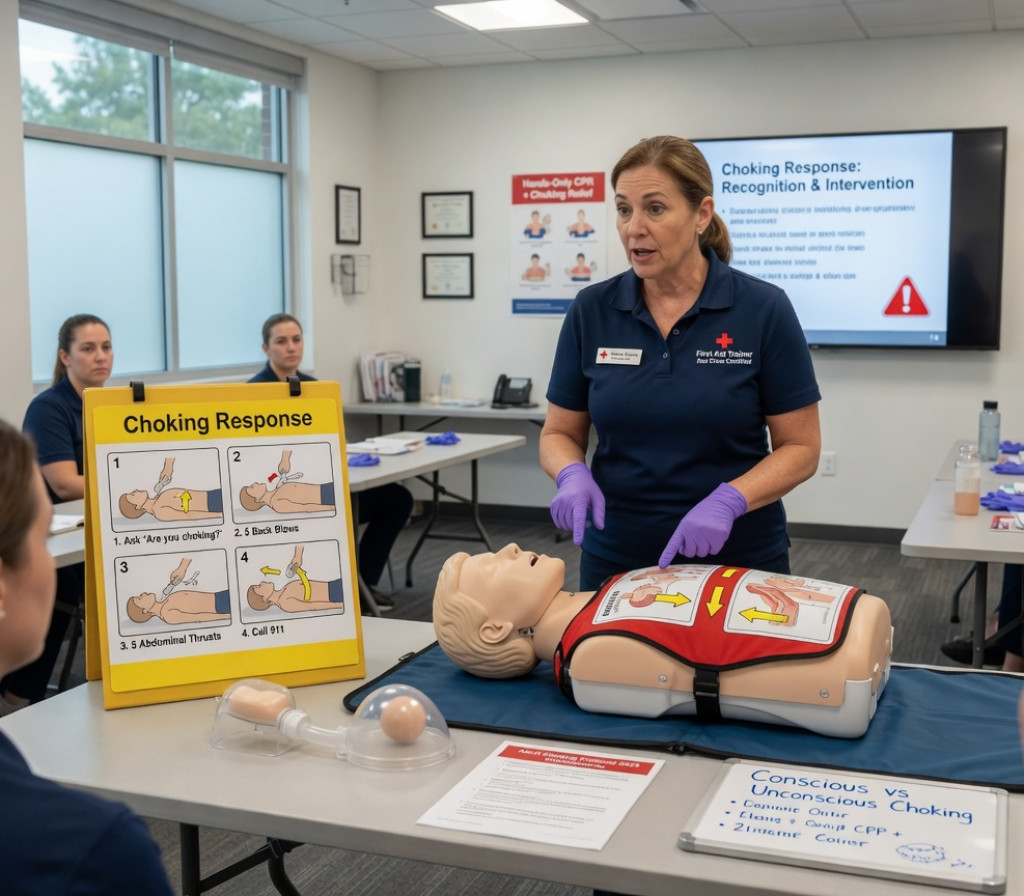
- Recognition and management of choking
- Control of severe external bleeding
- Treatment of shock and monitoring of casualties
- Placing a casualty in the recovery position
- Dealing with minor injuries and recording incidents
Course Agenda
Overview:
The course runs over one day, typically lasting six hours of guided learning. It blends short presentations with repeated practical drills and scenario practice in a training room environment.
Key Modules Covered
What you will learn:
- Understanding the role of the first aider and legal requirements
- Assessing an incident and managing the scene
- CPR and AED practical sessions
- Airway obstruction and choking procedures
- Wound care and bleeding control techniques
- Recognition of shock and casualty positioning
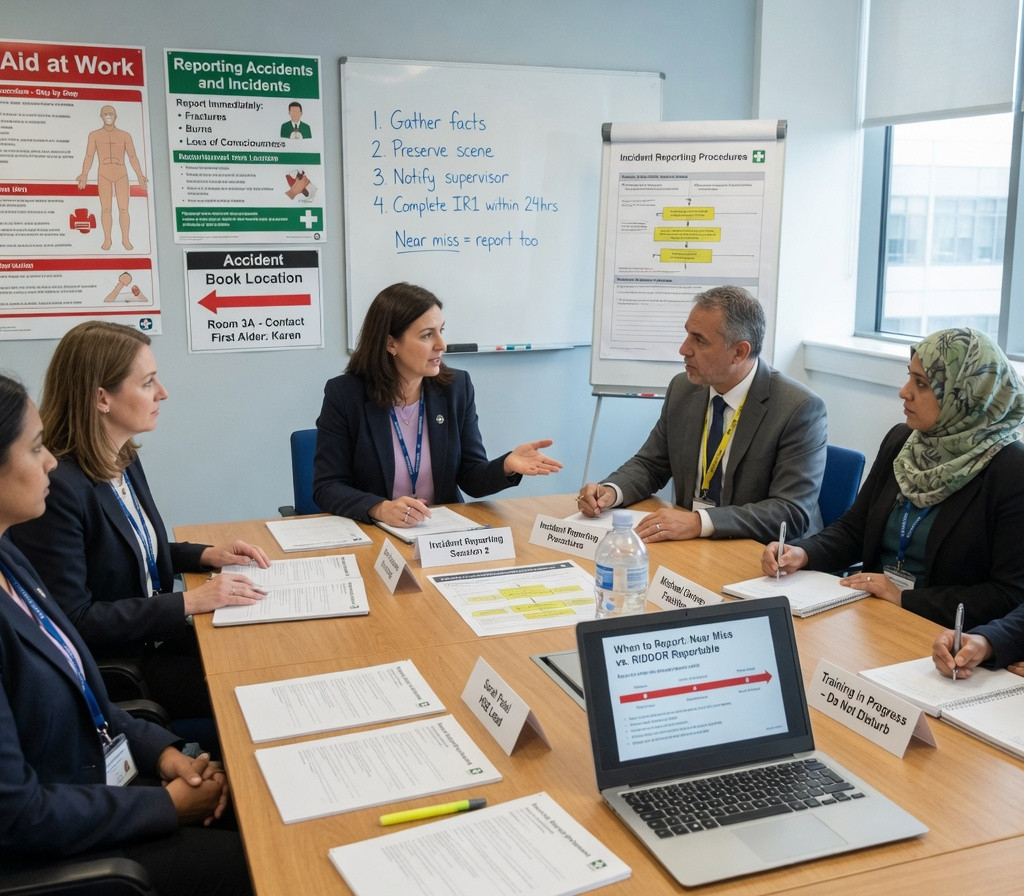
- Recording and reporting workplace incidents
Private Courses On-site
Emergency First Aid at Work (EFAW) training is also available as a dedicated course, at your premises, and on a date and time of your choosing. Advantages of group / private course is the convenience of candidates being in familiar surroundings and not having to travel, the lowest price, and the ability to have the course tailored to your own application.
Latest Delegate Feedback
⭐ Rated 4.4 By Our Candidates - (194 reviews)
Exceptional...
★★★★★
5 ⭐ – John D - Thu 28th May 2026
Better than other courses attended elsewhere....
★★★★★
5 ⭐ – Steve J - Tue 26th May 2026
Emergency First Aid At Work Session which took place in Lincoln was full of well prepared material.
★★★★★
5 ⭐ – George G - Mon 25th May 2026
Emergency First Aid At Work Class which took place in Great Yarmouth was cool, compliments to the chef. haha. Donna is an asset to Xyz.
★★★★★
5 ⭐ – Lee J - Sun 24th May 2026
Accreditation & Next Steps
What you will achieve as a result:
Successful delegates receive an Emergency First Aid at Work certificate issued by an approved awarding body. The qualification remains valid for three years. Employers should maintain records of certified first aiders and arrange refresher training before expiry to ensure continuous compliance.
Frequently Asked Questions
Most commonly asked Emergency First Aid at Work (EFAW) questions:
The course is delivered over a single day and contains six hours of training time.
No formal qualifications are required. Delegates should be physically able to perform practical skills such as CPR and kneeling beside a casualty.
Delegates learn incident assessment, adult CPR, AED operation, choking management, severe bleeding control, shock recognition and the recovery position.
Assessment is continuous through observation of practical skills and short written or verbal questions. There is no separate final exam.
A certificate confirming Emergency First Aid at Work is issued by an approved awarding organisation.
The certificate is valid for three years from the date of successful completion.
A full refresher course must be completed before the expiry date to maintain the qualification.
EFAW is designed for low-risk workplaces and covers emergency response only, whereas the longer course includes additional topics such as fractures, burns and illness recognition for higher-risk environments.
Delegates should wear comfortable clothing suitable for floor-based practical exercises. All training materials and manikins are provided.
Yes. The techniques taught apply to any emergency situation involving adults, although the course focuses on workplace contexts.
Absolutely. The training is structured for complete beginners and builds skills progressively through repeated practice.
Annual refresher sessions are recommended to maintain competence even though the formal qualification lasts three years.
Prices per person typically start at £75. Discounts available for multi person or group bookings (depending upon location)
More Information
This training prepares individuals to act calmly and effectively during the critical minutes before an ambulance arrives, helping to reduce the severity of workplace injuries.
Last updated: May 2026 • Part of XYZ Training Group