Phlebotomy Course
Key Features
Of this Phlebotomy Course:
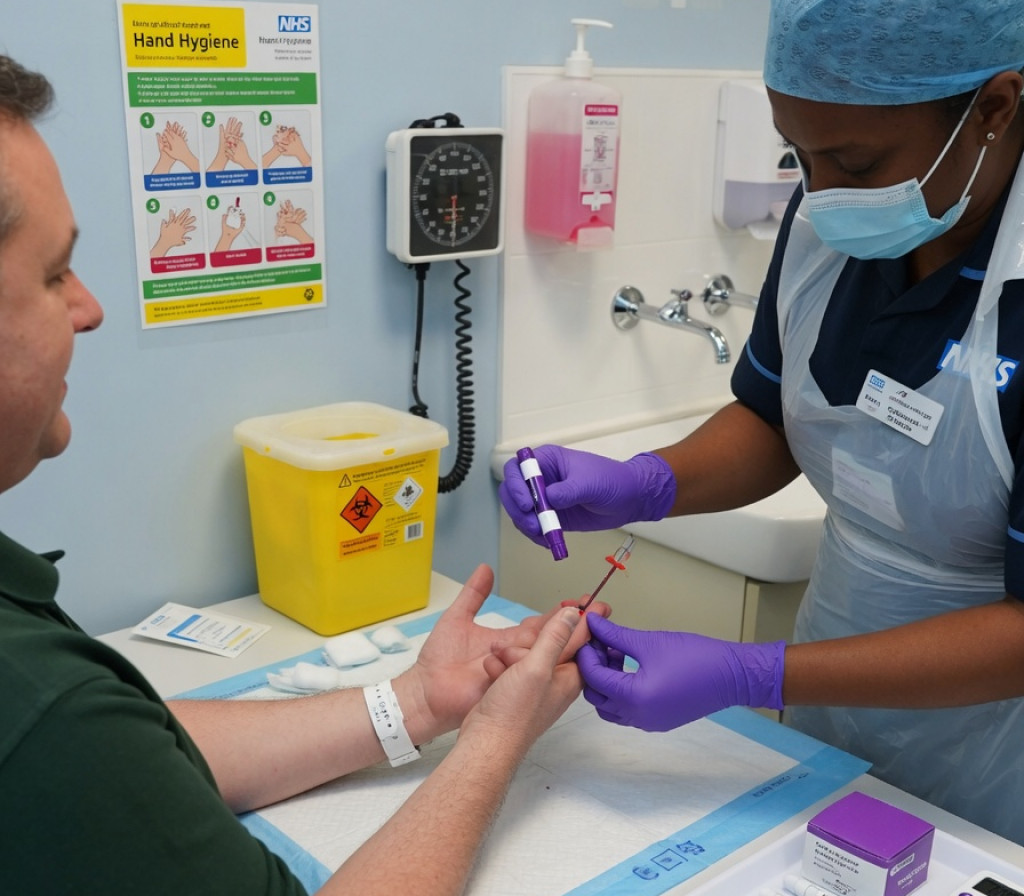
- Covers all standard UK phlebotomy competencies including venepuncture on adults and children, capillary sampling, and point-of-care testing
- Emphasises current infection prevention, sharps safety and sample integrity requirements aligned with NHS and UKAS standards
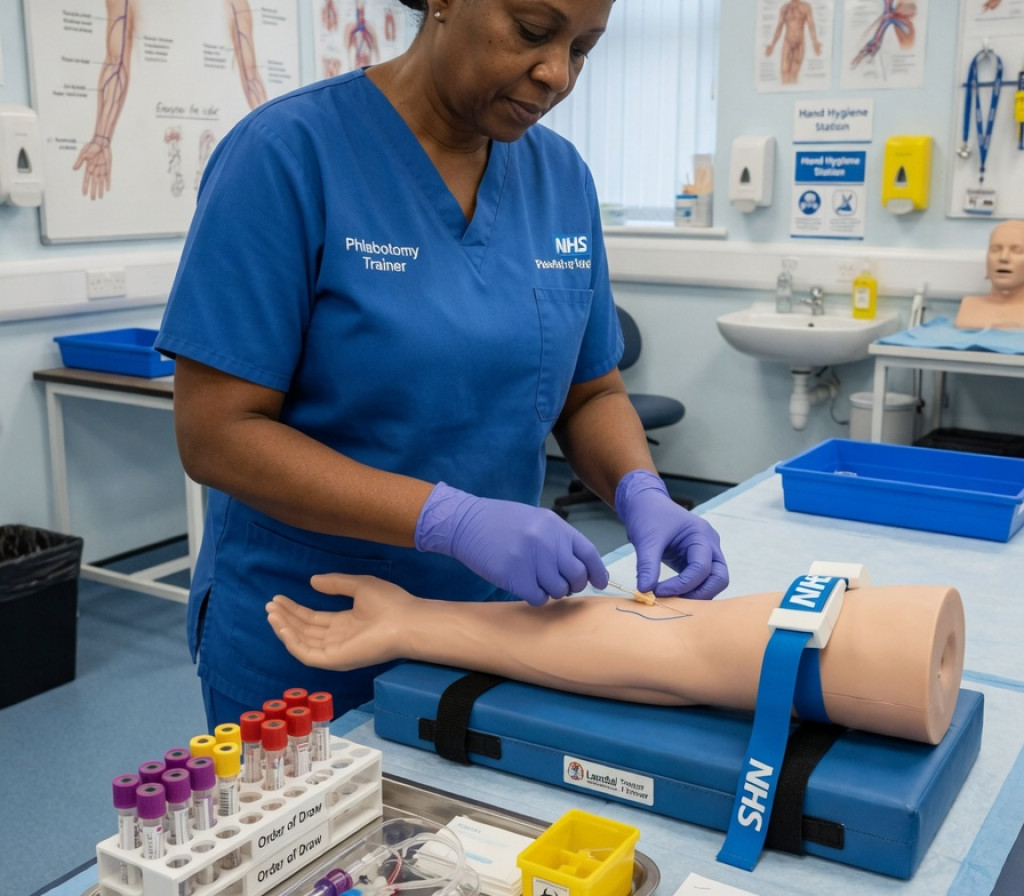
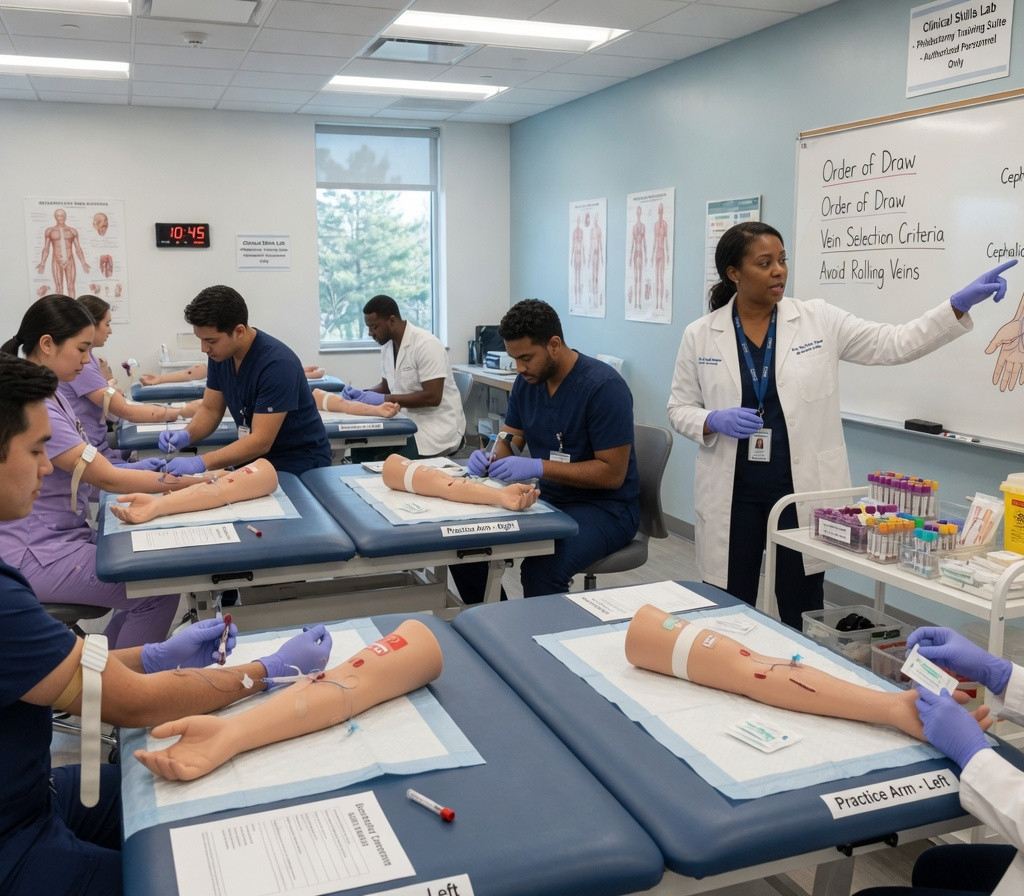
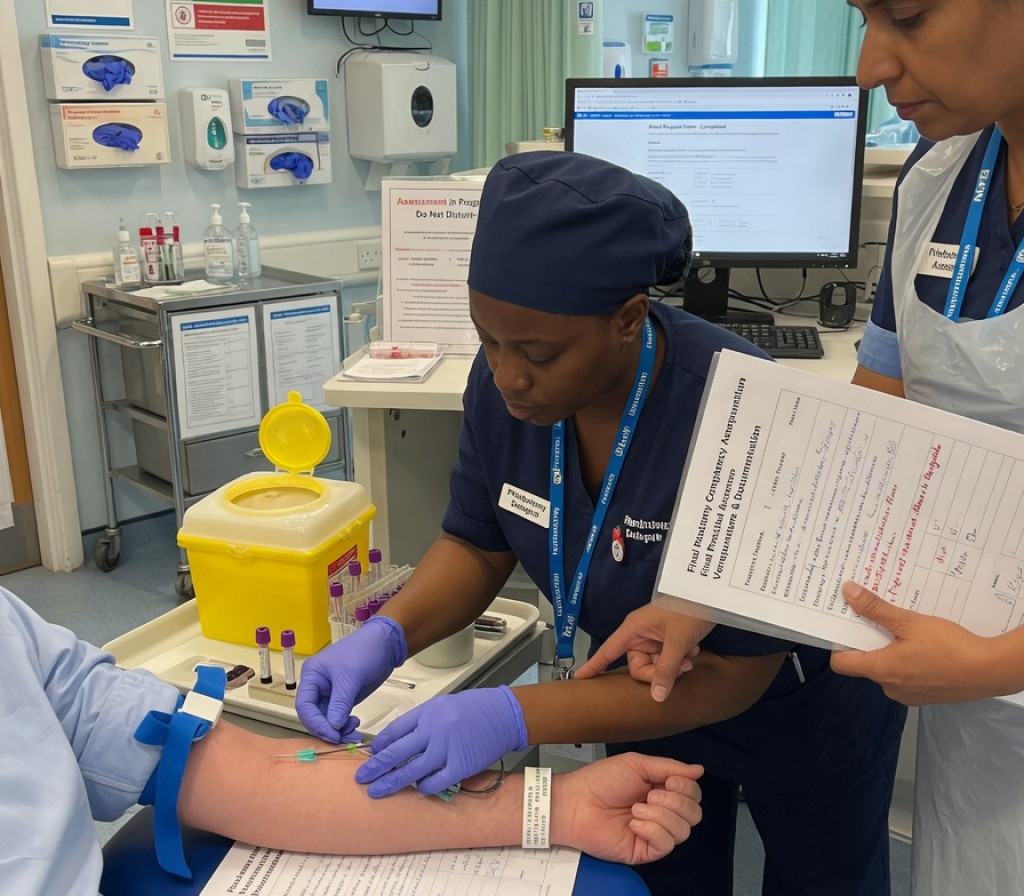
- Includes supervised practice on realistic training arms followed by live patient scenarios under direct supervision
- Addresses common complications such as haematomas, nerve injury and vasovagal reactions with clear response protocols
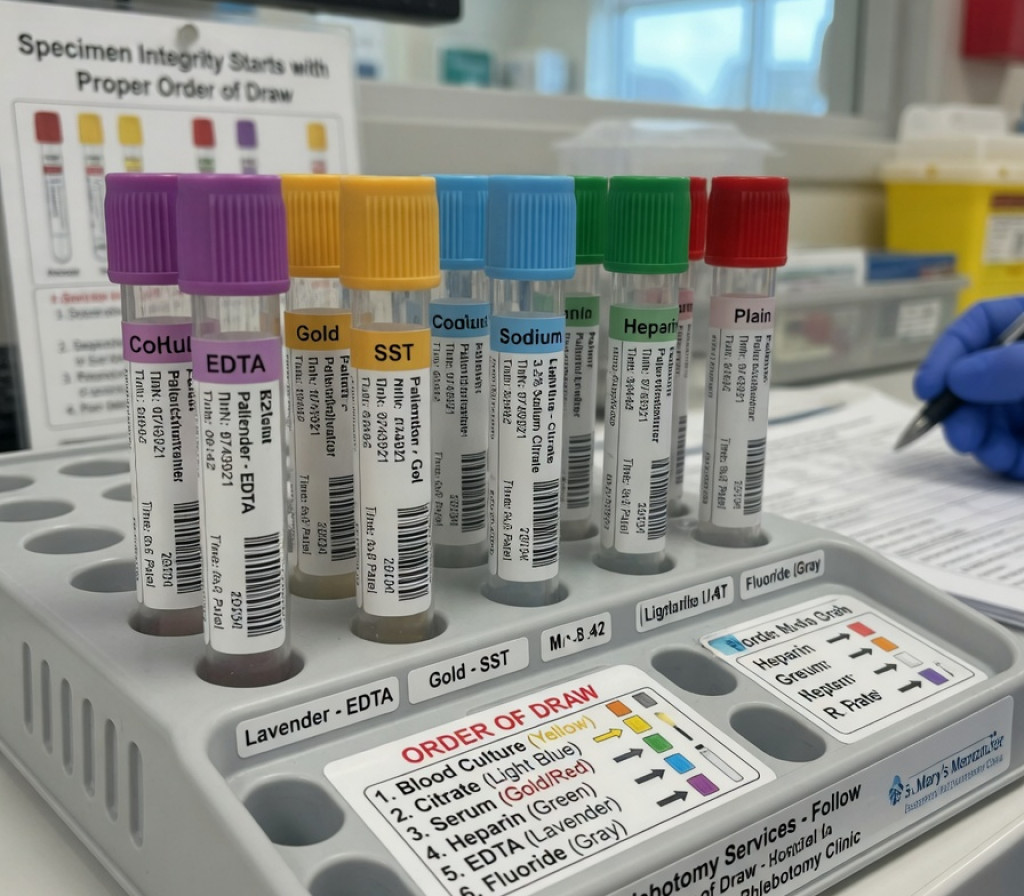
- Teaches correct order of draw, labelling at the bedside and transport requirements for all common blood tests
- Suitable for delegates working in GP surgeries, hospitals, community clinics and private phlebotomy services
Course Date Availability
Phlebotomy training at the following 23 centres. Prices from £142 per person :
Course Information
Overview:
Phlebotomy training equips healthcare workers with the practical skills and theoretical knowledge required to perform safe venous and capillary blood collection. The programme follows current UK best practice, covering anatomy, equipment selection, aseptic technique and patient communication so delegates can collect high-quality samples while minimising risk to both patient and practitioner. In 2026, accurate blood sampling remains fundamental to timely diagnosis and treatment across primary and secondary care, making competent phlebotomy a core requirement for many clinical roles.
Who Should Attend?
This course is designed for:
- Healthcare assistants and clinical support workers in primary care
- Registered nurses and midwives seeking formal venepuncture competence
- Newly appointed phlebotomists in NHS or private laboratories
- Practice nurses and treatment room staff in GP surgeries
- Community nurses and district nursing teams
- Medical laboratory assistants who perform phlebotomy duties
What You Will Learn
By the end of the course you will be able to:
- Identify suitable veins and select appropriate equipment for each patient
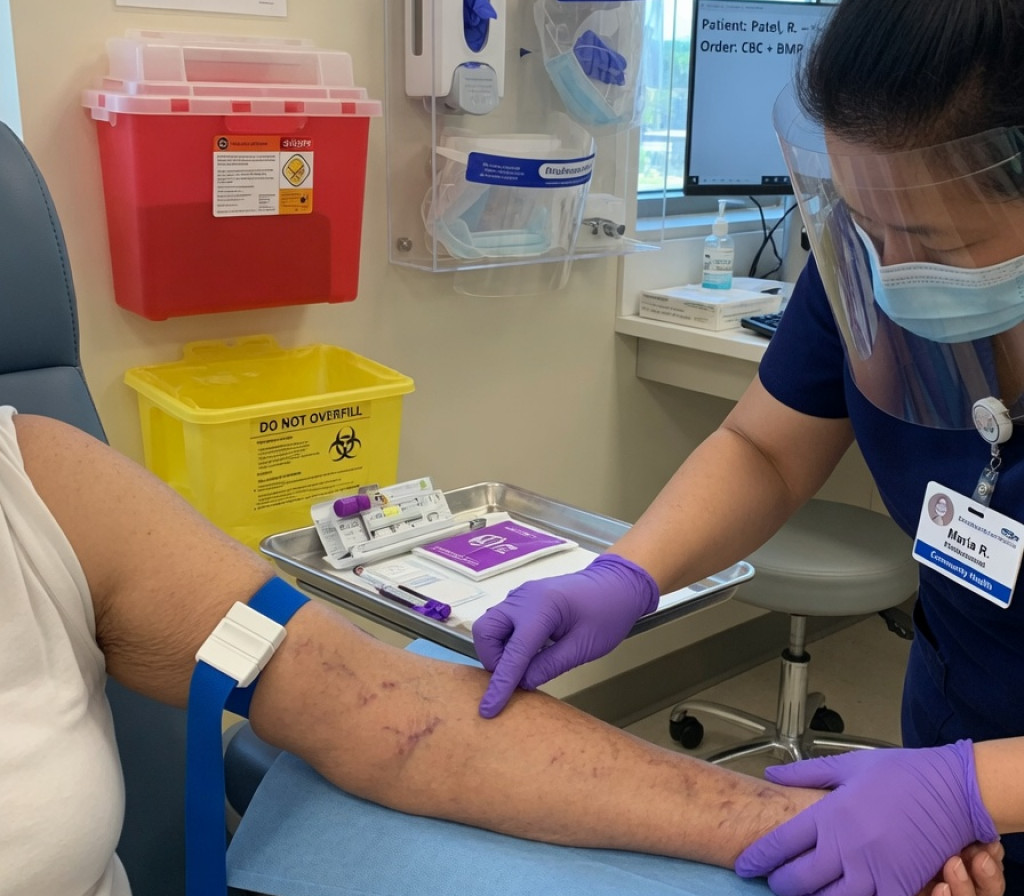
- Perform safe venepuncture using straight needles, butterfly devices and vacutainer systems
- Carry out capillary sampling from finger and heel sites
- Apply correct order of draw and bedside labelling to prevent sample errors
- Manage sharps disposal, spillages and exposure incidents according to current regulations
- Recognise and respond to adverse reactions including fainting and nerve damage
- Handle paediatric and difficult-vein patients with appropriate techniques
- Maintain sample integrity during collection, storage and transport
Course Agenda
Overview:
The course runs over two consecutive days in a clinical training environment. Day one combines theory sessions with equipment familiarisation and supervised practice on training arms. Day two focuses on live patient practice, complication management and final competence assessment.
Key Modules Covered
What you will learn:
- Anatomy and physiology of the circulatory system relevant to blood collection
- Infection control, hand hygiene and personal protective equipment
- Equipment types, selection and correct assembly
- Venepuncture technique, site selection and patient positioning
- Capillary sampling methods and paediatric considerations
- Order of draw, sample labelling and rejection criteria
- Complications, contraindications and emergency response
- Documentation, transport regulations and chain of custody
Private Courses On-site
Phlebotomy training is also available as a dedicated course, at your premises, and on a date and time of your choosing. Advantages of group / private course is the convenience of candidates being in familiar surroundings and not having to travel, the lowest price, and the ability to have the course tailored to your own application.
Latest Delegate Feedback
⭐ Rated 4.2 By Our Candidates - (161 reviews)
I thought the training held at our premises recently was good in every respect.
★★★★★
5 ⭐ – Anthony D - Tue 12th May 2026
All of us thought the class / course held at our premises recently was top notch. Good stuff!.
★★★★★
5 ⭐ – Simon R - Tue 12th May 2026
Session which took place at the Exeter venue recently was top rate..
★★★★★
5 ⭐ – Andrei N - Mon 11th May 2026
Fun and useful...
★★★★★
5 ⭐ – PAUL M - Sun 10th May 2026
Accreditation & Next Steps
What you will achieve as a result:
Delegates receive a certificate of competence in phlebotomy upon successful completion of both theory and practical assessments. The qualification is CPD accredited and recognised by NHS trusts and private healthcare providers. Many employers require this certificate before allowing unsupervised practice; delegates are advised to confirm local trust or employer requirements for ongoing supervision or portfolio evidence.
Frequently Asked Questions
Most commonly asked Phlebotomy questions:
The standard programme is delivered over two full days, combining classroom theory with supervised practical sessions on both training arms and live patients.
Delegates should normally work in a healthcare role with patient contact. No formal academic qualifications are required, but previous experience as a healthcare assistant or nurse is beneficial.
Yes. Delegates must demonstrate competent venepuncture on a minimum number of live patients under direct supervision before a certificate is awarded.
Successful delegates receive a CPD-accredited certificate of competence in phlebotomy valid for clinical practice across the UK.
The certificate itself does not expire, but employers and NHS trusts usually expect annual refresher training or competency reassessment to maintain skills.
Wear clinical uniform or smart workwear and closed-toe shoes. All equipment, training arms and PPE are provided during the sessions.
Yes. The content follows national guidelines and is accepted by NHS organisations, GP practices, community clinics and private laboratories.
This programme covers the full breadth of phlebotomy including paediatric sampling, difficult veins, point-of-care testing and sample transport requirements, whereas shorter workshops often focus only on basic adult venepuncture.
The course includes specific modules on paediatric and neonatal capillary sampling with supervised practice on appropriate models.
You may begin supervised practice immediately. Full unsupervised practice depends on your employer’s local policy and any additional competency sign-off required.
Many providers offer annual update sessions covering new equipment, guidelines or audit findings to help maintain competence.
Additional supervised practice sessions can be arranged until competence is achieved; the certificate is only issued once all required skills are demonstrated safely.
Prices per person typically start at £142. Discounts available for multi person or group bookings (depending upon location)
More Information
The training prepares delegates for the full range of phlebotomy duties encountered in UK clinical settings. Emphasis is placed on patient safety, sample quality and professional accountability so that newly qualified phlebotomists can contribute effectively from their first day in post.
Last updated: Jun 2026 • Part of XYZ Training Group